
What is carpal tunnel syndrome?
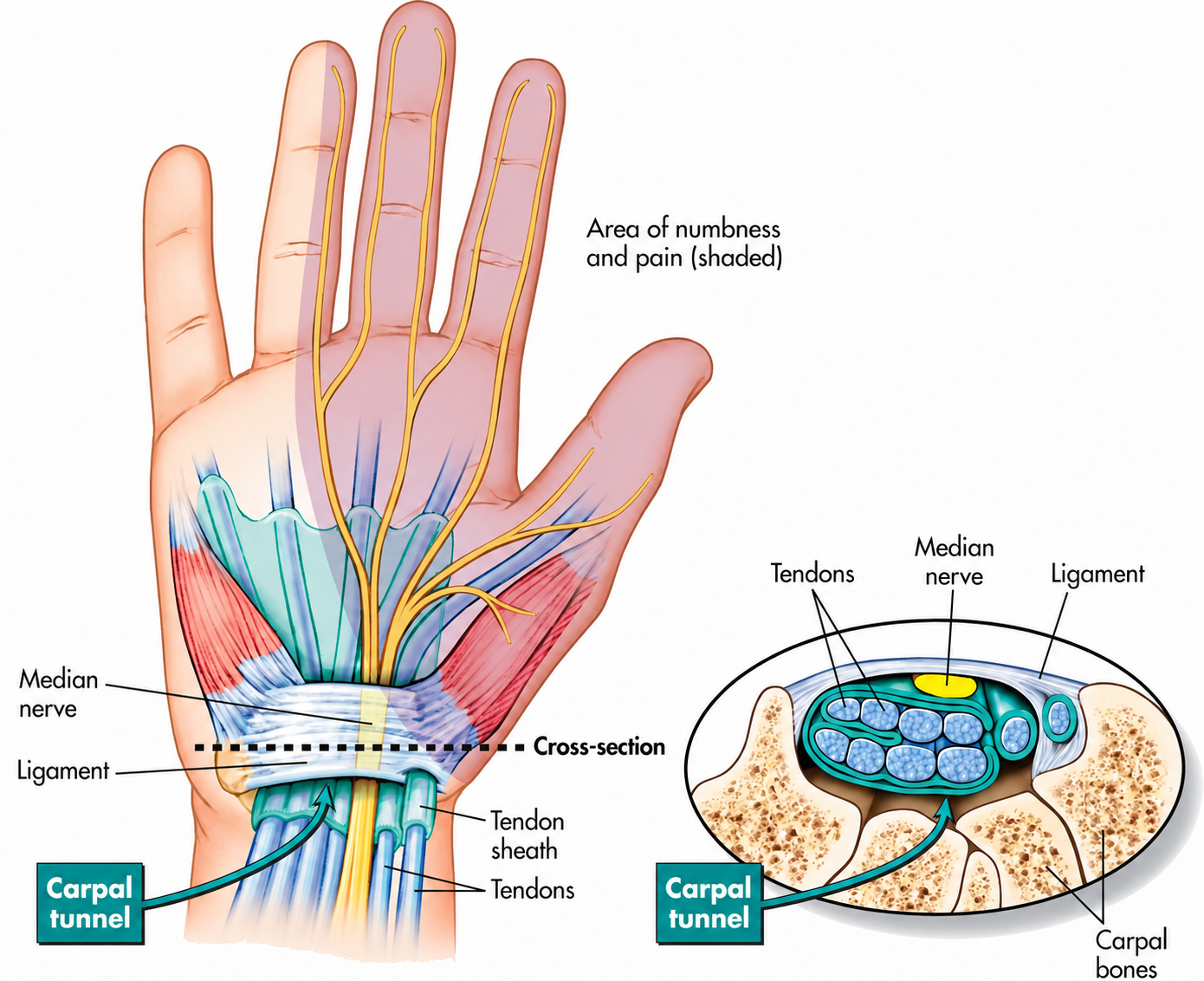
Carpal tunnel syndrome is a common condition caused by compression of the median nerve at the wrist. It can lead to numbness, tingling, pain, weakness, or clumsiness in the hand and fingers.
Symptoms often develop gradually and may worsen over time if the nerve remains compressed.
Common symptoms
Common symptoms may include:
Numbness or tingling in the thumb, index and middle fingers
Symptoms worse at night or early morning
Waking and needing to shake the hand
Pain or burning discomfort in the hand or forearm
Weak grip strength or dropping objects
Difficulty with buttons, fine tasks, or prolonged driving
Thumb weakness or muscle wasting in more advanced cases
Symptoms may initially come and go, but persistent or worsening symptoms can indicate ongoing nerve compression.

Causes and risk factors
Carpal tunnel syndrome occurs when pressure builds within the carpal tunnel at the wrist, compressing the median nerve.
Factors that may contribute include:
Repetitive hand or wrist activities
Vibrating tools or heavy manual work
Diabetes or thyroid disease
Pregnancy or fluid retention
Arthritis or previous wrist injury
Anatomical narrowing of the carpal tunnel
In many patients, no single cause is identified.
When to seek specialist assessment
Specialist assessment may be appropriate if:
Symptoms are persistent or worsening
Night waking is occurring regularly
Hand weakness or clumsiness develops
Symptoms interfere with work, sleep, sport, or daily activities
Splinting or conservative treatment has not improved symptoms
There is concern regarding permanent nerve compression
Early treatment may help prevent long-term nerve dysfunction.
Diagnosis
Carpal tunnel syndrome is commonly diagnosed through a combination of history and clinical examination.
In some cases, nerve conduction studies may be recommended to:
confirm the diagnosis,
assess severity,
or help guide treatment decisions.
Additional imaging is not usually required unless another condition is suspected.
Treatment options
Treatment depends on symptom severity and duration.
Conservative treatment options may include:
activity modification,
night splinting,
hand therapy,
anti-inflammatory strategies,
or corticosteroid injection.
If symptoms are severe, progressive, recurrent, or associated with weakness or muscle wasting, surgery may be recommended.
Carpal tunnel release surgery
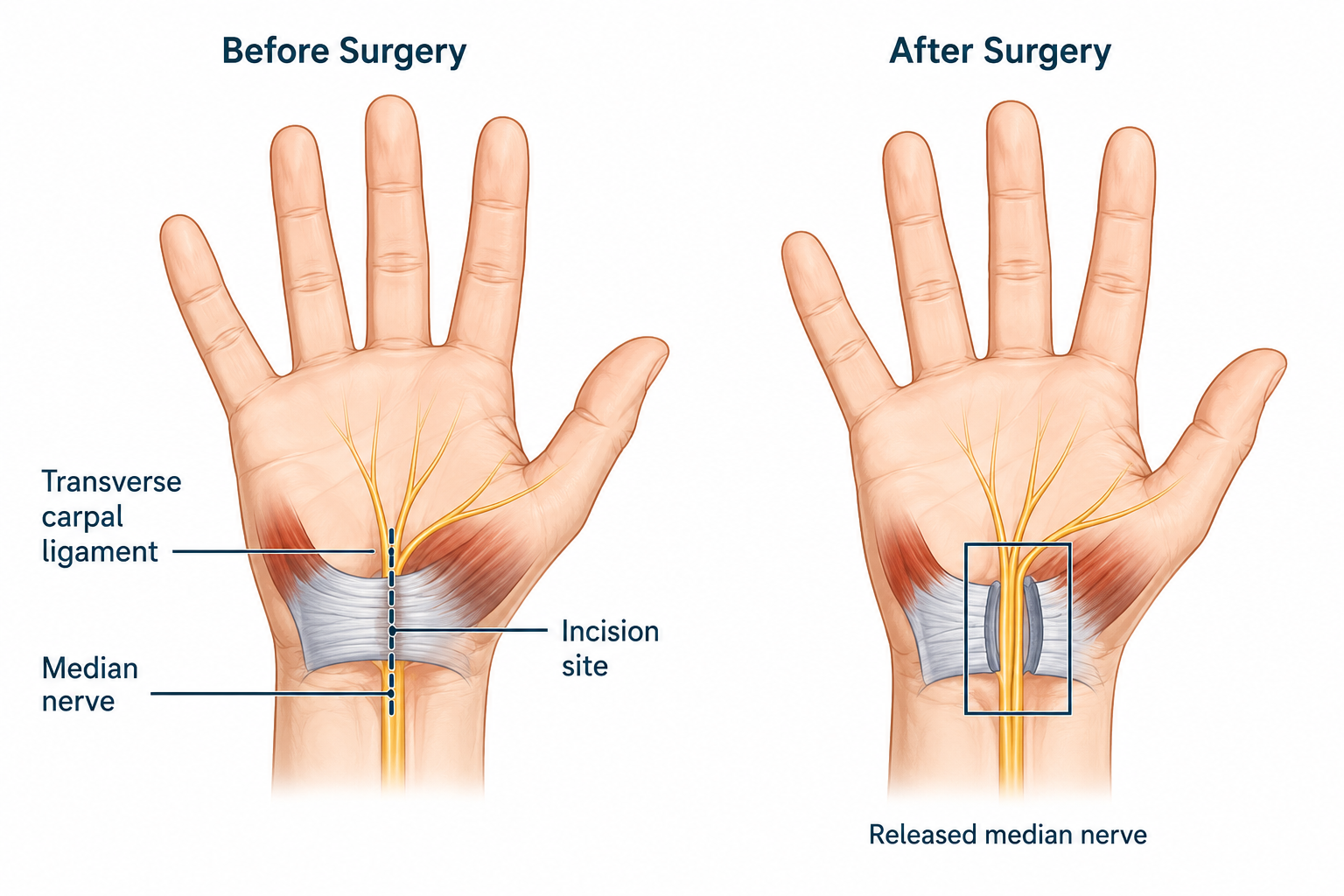
Carpal tunnel release surgery involves dividing the tight ligament over the median nerve to reduce pressure within the tunnel.
The procedure is commonly performed as day surgery and is usually completed under local anaesthetic or light sedation.
The aim of surgery is to relieve nerve compression and prevent further nerve damage.
Recovery after surgery
Light hand use is usually possible soon after surgery.
Night symptoms and tingling often improve early, although recovery may take longer in patients with more severe or longstanding nerve compression.
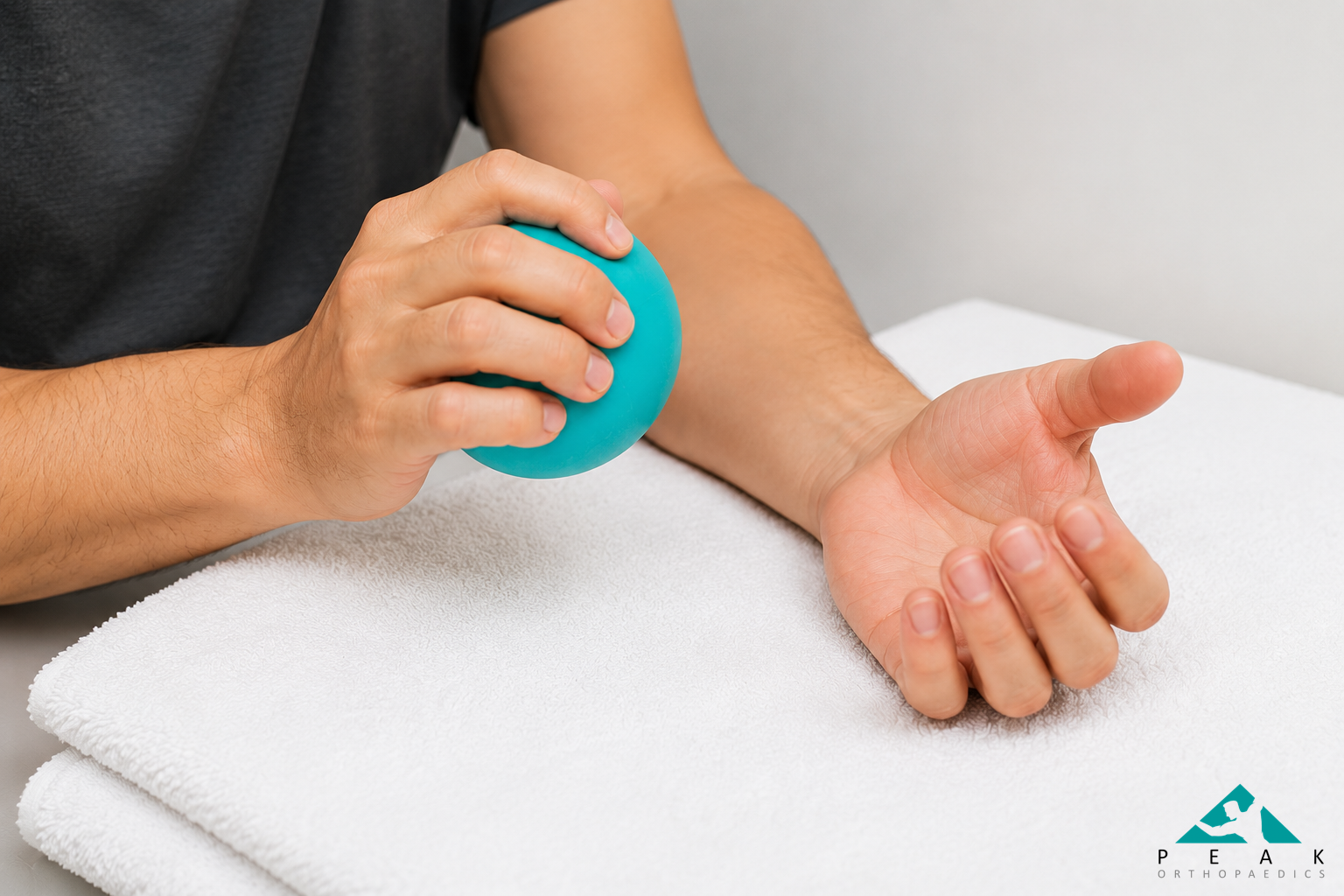
Grip strength and scar tenderness can take time to settle, and recovery timelines vary depending on occupation and symptom severity.
Post-operative hand therapy is occasionally recommended.
Already booked for surgery?
Our Peak Recovery Guide provides everything you need to know before, during and after your operation, helping you prepare for surgery and recover with confidence.
📖 View the Peak Recovery Guide
Hand therapists & physiotherapists
Our Peak Rehabilitation Protocol provides detailed rehabilitation guidelines to support postoperative care. Patients may also wish to bring a copy to their therapy appointments.
Frequently asked questions
Can carpal tunnel syndrome go away on its own?
Mild symptoms may improve temporarily, particularly with activity modification or splinting. Persistent nerve compression, however, often progresses over time.
What fingers are affected in carpal tunnel syndrome?
Symptoms most commonly affect the thumb, index finger, middle finger, and part of the ring finger.
When is surgery recommended?
Surgery may be recommended when symptoms are persistent, severe, recurrent, associated with weakness, or not improving with conservative treatment.
How long does recovery take after surgery?
Most patients can use the hand lightly soon after surgery, although full recovery varies depending on symptom severity, nerve compression duration, and work demands.
Can carpal tunnel syndrome cause permanent nerve damage?
Longstanding severe nerve compression can result in permanent numbness, weakness, or muscle wasting if left untreated.
Related Conditions
De Quervain’s Tenosynovitis
Referral information
Mr Francis Ting provides specialist assessment and treatment for carpal tunnel syndrome in New Plymouth and the wider Taranaki region.
As an orthopaedic specialist clinic, patients usually require referral from their GP, physiotherapist, hand therapist, or other health professional to access ACC or private insurance support.