
What is a digital mucous cyst?
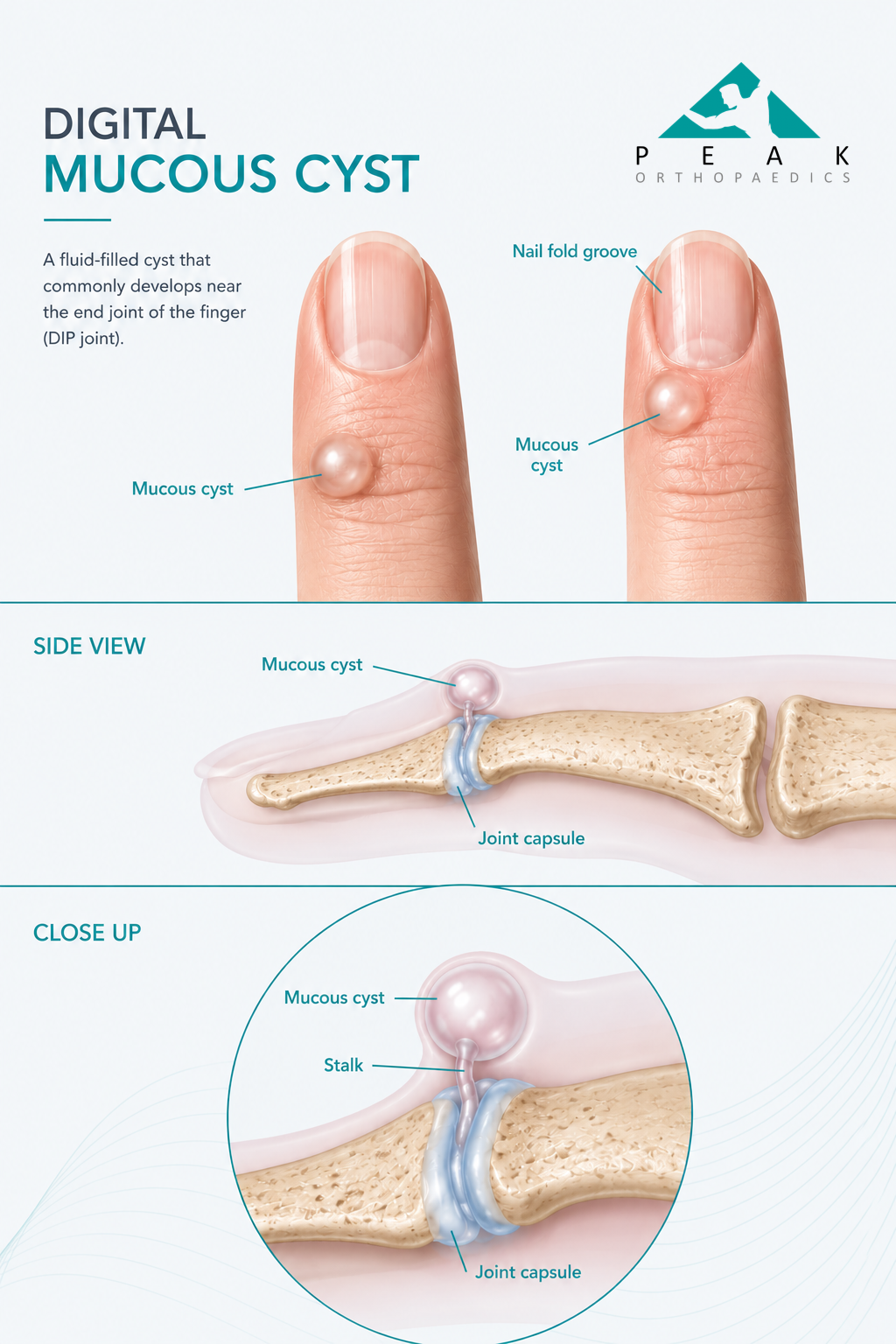
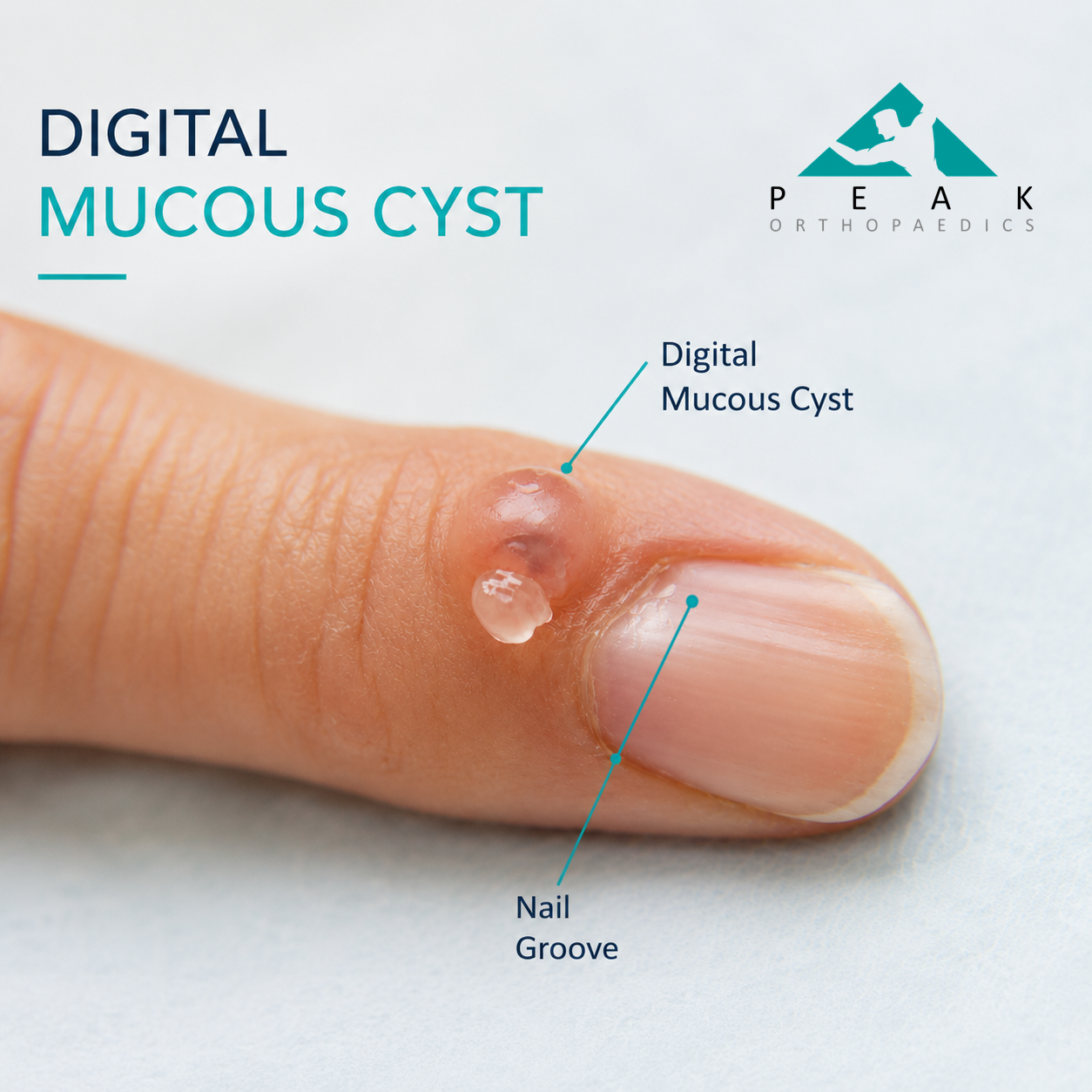
A digital mucous cyst is a small fluid-filled cyst that commonly develops near the end joint of the finger (DIP joint), usually close to the nail.
These cysts are often associated with underlying osteoarthritis of the joint and are a type of ganglion cyst arising from the joint capsule.
They commonly occur on the index, middle or ring fingers.
Common symptoms
Symptoms may include:
A lump or swelling near the fingernail
Intermittent drainage of clear jelly-like fluid
Tenderness or discomfort
Nail deformity or grooving
Thin overlying skin prone to breakdown
Underlying finger joint arthritis or stiffness
Some cysts remain stable, while others gradually enlarge over time.
Causes
Digital mucous cysts are commonly associated with wear-and-tear arthritis of the distal interphalangeal (DIP) joint.
Small osteophytes (bone spurs) and joint degeneration can contribute to cyst formation.
When to seek specialist assessment
Specialist review may be appropriate if:
The cyst becomes painful
Recurrent drainage occurs
The skin becomes thin or at risk of rupture
Nail deformity develops
The cyst enlarges
Symptoms interfere with daily activities
Persistent skin breakdown can increase the risk of infection into the joint.
Treatment options
Observation may be appropriate for small minimally symptomatic cysts.
Aspiration or needle drainage may occasionally be performed, although recurrence is relatively common.
Repeated drainage or self-puncture is generally discouraged due to the thin overlying skin and small risk of introducing infection into the joint.
For persistent, recurrent, painful, or thin-skinned cysts, surgical excision may be recommended.
Treatment commonly involves removal of the cyst together with underlying osteophytes and diseased tissue to reduce recurrence risk.
Digital mucous cyst Surgery
Surgery is typically performed as a day procedure under local anaesthetic.
The procedure usually involves:
excision of the cyst,
treatment of the cyst stalk,
and removal of underlying DIP joint osteophytes where appropriate.
Care is taken to protect the surrounding skin, nail bed and extensor tendon.
Recovery after surgery
Light hand use is usually possible soon after surgery.
Dressings and wound care are important while the skin heals.
Residual joint stiffness or underlying arthritic discomfort may persist in some patients due to pre-existing DIP joint arthritis.
Recurrence following surgery is possible but generally less common when associated osteophytes are addressed.
Frequently asked questions
Is a digital mucous cyst cancerous?
No. Digital mucous cysts are benign cysts associated with the finger joint.
Can a digital mucous cyst go away on its own?
Some small cysts may fluctuate in size or occasionally settle, although many persist long term.
Should I pop or drain the cyst myself?
Self-drainage is generally discouraged due to the risk of skin breakdown and joint infection.
Is the cyst related to arthritis?
Yes. Most digital mucous cysts are associated with underlying osteoarthritis of the DIP joint.
Can the cyst come back after surgery?
Recurrence is possible, although recurrence rates are generally lower when the cyst stalk and underlying osteophytes are treated at surgery.
Referral information
Peak Orthopaedics provides specialist assessment and treatment of digital mucous cysts in New Plymouth and the wider Taranaki region.
As an orthopaedic specialist clinic, patients usually require referral from their GP, physiotherapist, hand therapist, or other health professional to access ACC or private insurance support.