Introduction
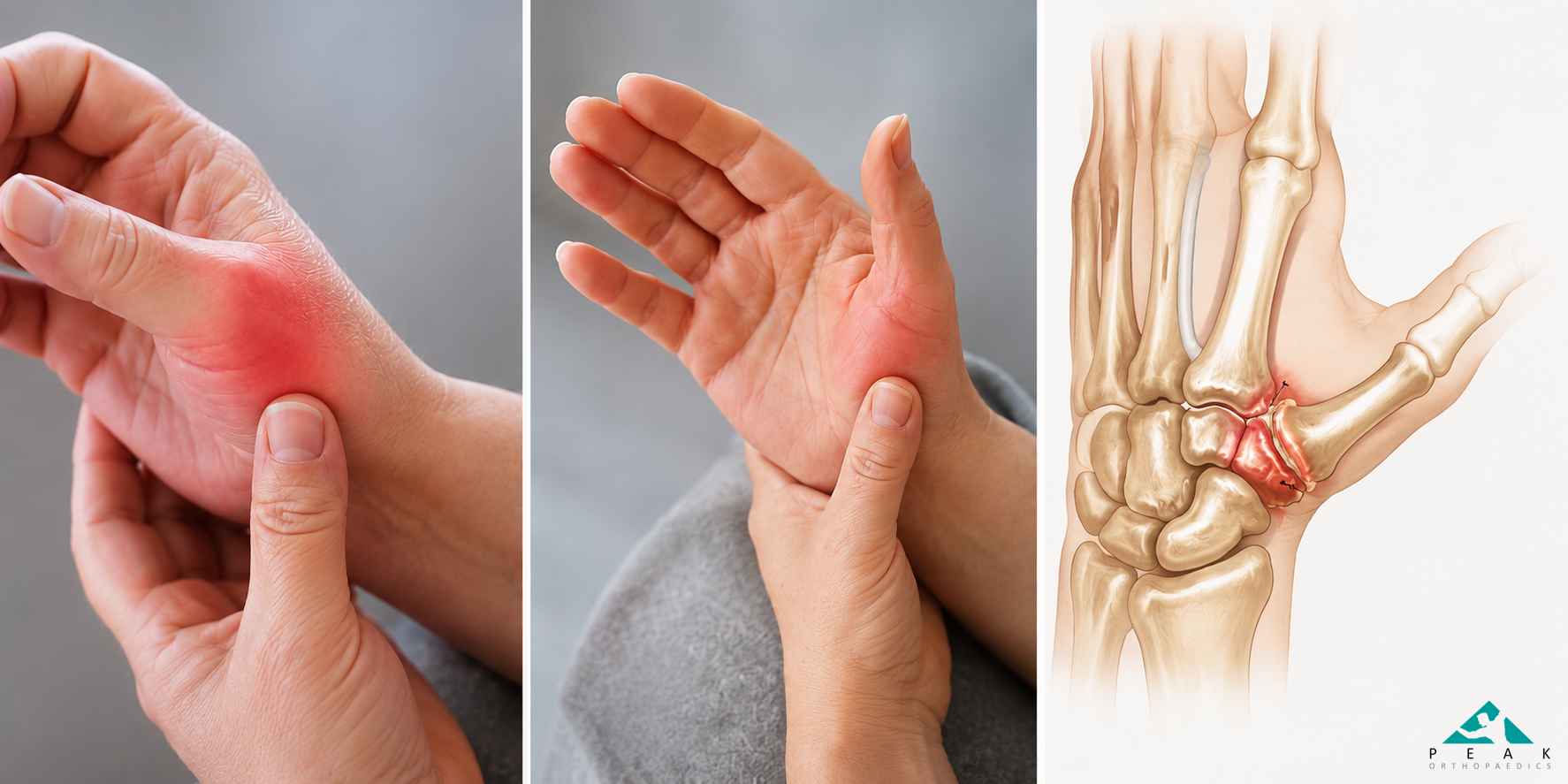
Thumb CMC joint arthritis (base of thumb arthritis) is a common cause of pain, weakness and loss of hand function. It affects the carpometacarpal (CMC) joint at the base of the thumb, which is important for gripping, pinching and everyday hand activities.
The condition commonly develops gradually over time due to joint wear, instability and cartilage degeneration.
Symptoms may interfere with:
opening jars,
turning keys,
gripping objects,
pinching,
writing,
and daily activities.
Common Symptoms
Symptoms may include:
Pain at the base of the thumb
Weakness with gripping or pinching
Loss of hand strength
Difficulty opening jars or turning keys
Swelling at the thumb base
Thumb instability
Grinding or clicking sensations
Progressive deformity at the thumb base
Symptoms are often worse with repetitive hand use.
Causes
Thumb CMC arthritis commonly develops due to gradual wear of the thumb base joint over time.
Factors that may contribute include:
age-related degeneration,
ligament laxity,
repetitive hand use,
previous injury,
and joint instability.
Women are more commonly affected than men.
Diagnosis
Diagnosis is usually made through:
clinical assessment,
examination,
and X-rays of the thumb base joint.
X-rays may demonstrate:
joint space narrowing,
osteophytes (bone spurs),
subluxation,
and joint degeneration.
Non-Surgical Treatment
Many patients improve with non-surgical treatment.
Options may include:
activity modification,
splinting,
anti-inflammatory medication,
hand therapy,
strengthening exercises,
and corticosteroid injection.
Symptoms often fluctuate over time.
Surgical Treatment
Surgery may be considered when pain and functional limitation persist despite non-surgical treatment.
Surgical options may include:
The most appropriate procedure depends on:
patient age,
activity demands,
joint pattern,
instability,
and surgeon assessment.
Thumb Joint Replacement
Thumb CMC joint replacement is an advanced surgical option for selected patients with thumb base arthritis.
The procedure involves replacing the damaged thumb base joint surfaces with an implant designed to restore movement, improve stability and reduce pain.
Potential advantages may include:
preservation of thumb movement,
faster functional recovery in selected patients,
maintenance of pinch strength,
and more natural joint mechanics.
Not all patients are suitable candidates for thumb joint replacement, and careful patient selection is important.
Recovery After Surgery
Recovery depends on the procedure performed.
Most patients require:
a period of splinting,
hand therapy,
gradual return of movement,
and progressive strengthening exercises.
Improvement often continues over several months following surgery.
Hand therapy is commonly recommended following surgery to assist recovery, splinting and restoration of thumb movement.
Related Rehabilitation Protocols
Thumb trapeziectomy and LRTI recovery & rehabilitation
Frequently Asked Questions
What is thumb CMC arthritis?
Thumb CMC arthritis is arthritis affecting the joint at the base of the thumb.
What causes pain at the base of the thumb?
Pain is commonly caused by degeneration of the thumb CMC joint, leading to inflammation, instability and cartilage wear.
Can thumb arthritis be treated without surgery?
Yes. Many patients improve with splinting, activity modification, hand therapy and injections.
When should surgery be considered?
Surgery may be considered when symptoms significantly interfere with daily activities despite appropriate non-surgical treatment.
What is thumb joint replacement?
Thumb joint replacement is a surgical procedure where the damaged thumb base joint is replaced with an implant to improve pain and function in selected patients.
Is thumb joint replacement suitable for everyone?
No. Suitability depends on multiple factors including arthritis pattern, bone quality, stability and patient activity demands.
Related Conditions
De Quervain’s Tenosynovitis
Referral Information
Peak Orthopaedics provides specialist assessment and treatment of thumb CMC arthritis in New Plymouth and the wider Taranaki region.
As an orthopaedic specialist clinic, patients usually require referral from their GP, physiotherapist, hand therapist, or other health professional to access ACC or private insurance support.