What is Trigger Finger?
Trigger finger is a common condition that causes a finger or thumb to catch, click or lock during movement.
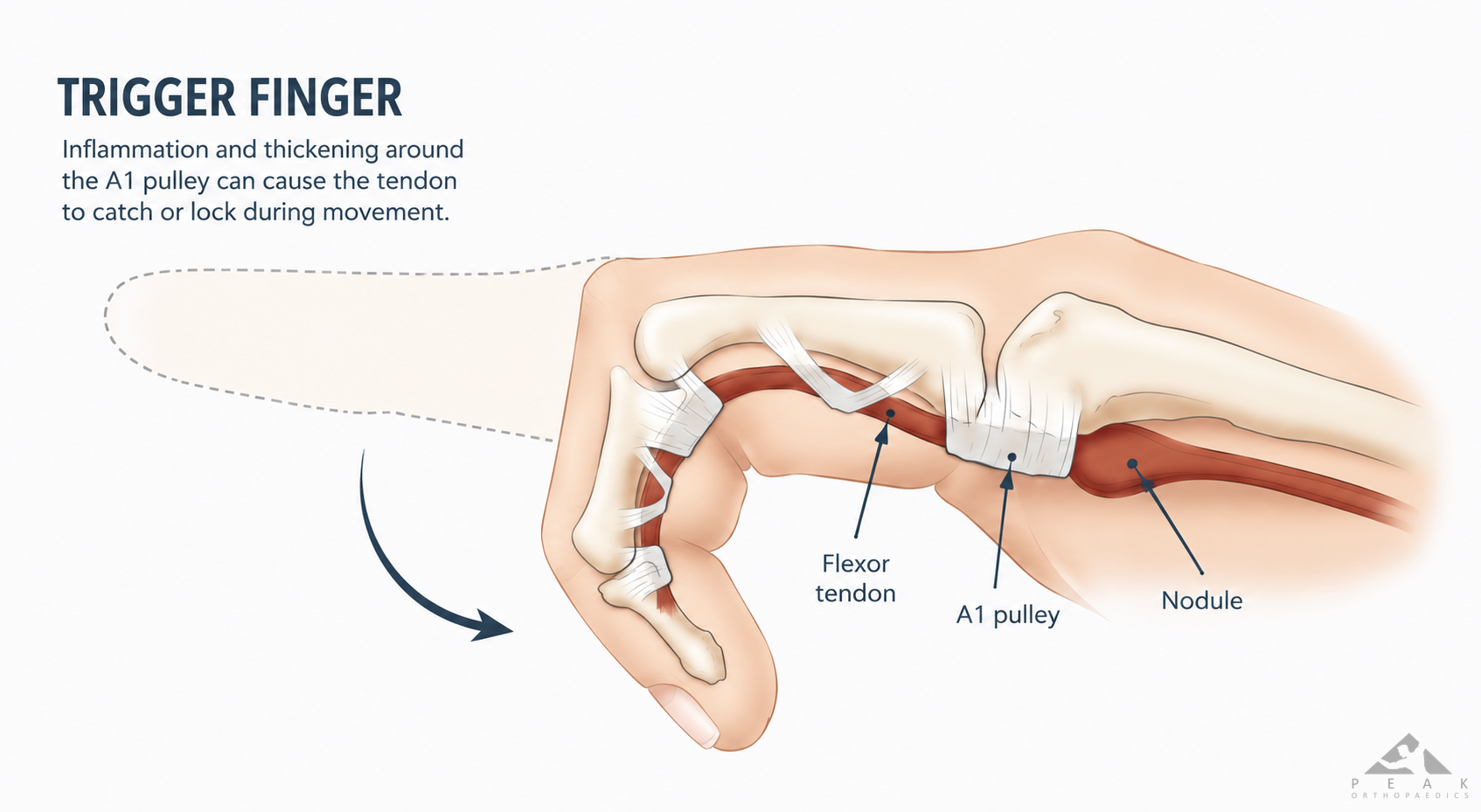
The condition occurs when inflammation and thickening of the tendon or tendon sheath prevents the tendon from gliding smoothly through a pulley in the finger.
Trigger finger can affect any finger or thumb and may gradually worsen over time.
Common Symptoms
Symptoms may include:
Clicking or catching of a finger or thumb
Pain in the palm or base of the finger
Finger stiffness
Locking of the finger in a bent position
Tenderness over the tendon
Difficulty gripping objects
Symptoms that are worse in the morning
In more advanced cases, the finger may become locked and require assistance from the other hand to straighten.
Causes
Trigger finger may occur without an obvious cause but is more common in:
Repetitive hand use
Diabetes
Rheumatoid arthritis
Previous hand injury
Middle age and older adults
Trigger thumb is a common variation affecting the thumb.
Diagnosis
Diagnosis is usually made through clinical assessment and examination.
Investigations such as X-rays or ultrasound scans are occasionally used if the diagnosis is uncertain or to assess for other causes of hand pain.
Non-Surgical Treatment
Many patients improve with non-surgical treatment.
Treatment options may include:
Activity modification
Anti-inflammatory medication
Splinting
Hand therapy
Corticosteroid injection
Corticosteroid injections can be highly effective, particularly when symptoms are relatively recent.
Surgical Treatment
Surgery may be considered when:
Symptoms persist despite non-surgical treatment
Corticosteroid injections fail to provide lasting relief
The finger becomes locked
Symptoms significantly affect daily activities
Trigger finger release surgery aims to restore smooth tendon movement and eliminate triggering.
Trigger Finger Release Surgery
Trigger finger release is a minor surgical procedure commonly performed under local anaesthetic.
During surgery, the tight A1 pulley causing the tendon to catch is released, allowing the tendon to glide freely.
The procedure is highly successful and typically provides reliable long-term relief from triggering and locking.
Most patients can move their finger immediately following surgery.
Recovery After Surgery
Recovery following trigger finger release is usually straightforward.
Most patients are encouraged to:
Move the finger immediately after surgery
Perform gentle range of motion exercises
Keep the wound clean and dry
Gradually return to normal activities
Soreness and swelling can persist for several weeks, although triggering usually resolves immediately.
Related Rehabilitation Protocols
Trigger Finger Release Rehabilitation
Frequently Asked Questions
Will trigger finger go away on its own?
Mild cases occasionally improve, but persistent symptoms often require treatment.
Is a corticosteroid injection effective?
Many patients experience significant improvement following corticosteroid injection, particularly when symptoms have been present for a shorter period.
When should surgery be considered?
Surgery may be appropriate when symptoms persist despite non-surgical treatment or when the finger becomes locked.
Is trigger finger release performed under local anaesthetic?
Yes. Most trigger finger release procedures are performed under local anaesthetic as a day procedure.
How successful is trigger finger release surgery?
Trigger finger release surgery has a very high success rate and provides reliable long-term relief for most patients.
Related Hand & Wrist Conditions
Related Procedures
Referral Information
Francis Ting provides specialist assessment and treatment of trigger finger and trigger thumb in New Plymouth and the wider Taranaki region.
Patients are typically referred by their GP, physiotherapist, hand therapist or another healthcare professional. Referral is generally required for ACC and private insurance funding pathways.